
Fuel Crisis in Kenya: Opposition Issues 7-Day Ultimatum as Protests Loom Over Soaring Prices
By Mercy Chete
Nairobi, Kenya As pump prices climb to near-record levels, Kenya’s opposition has issued a stern 7-day ultimatum to President William Ruto’s government, demanding immediate tax relief and the scrapping of the controversial Government-to-Government (G-to-G) fuel import deal. With protests scheduled for Tuesday, April 21, under the hashtag #RejectFuelPrices, the country is bracing for potential nationwide mass action over the cost-of-living crisis.
The Energy and Petroleum Regulatory Authority (EPRA) recently hiked fuel prices by up to 7%, pushing super petrol in Nairobi to approximately KSh 211 per litre. Diesel and kerosene followed suit amid global supply disruptions caused by the escalating conflict in the Middle East, particularly involving the Strait of Hormuz. Despite the government’s swift response slashing VAT on petroleum products from 16% to 8% for three months and injecting KSh 6.5 billion in subsidies opposition leaders argue these measures fall short.
Opposition Pressure Mounts
Leading the charge is the United Opposition coalition, fronted by former Deputy President Rigathi Gachagua. In a press briefing on April 15, 2026, Gachagua delivered a blunt message to the government:
“President William Ruto, you must immediately instruct the National Assembly speaker to convene a special sitting to scrap G-to-G… If there is no action taken on the part of William Ruto, we shall announce further measures to the people of Kenya to force William Ruto and the National Assembly to act in the best interest of the people of Kenya.”
The coalition’s joint statement escalated the demands, accusing the administration of prioritising private interests:
“We unequivocally demand the cancellation of the Government-Government petroleum framework as it involves handpicked Oil Marketing Companies that represent the interests of the President.”
Other demands include suspending the recently increased road maintenance levy (from KSh 18 to KSh 25 per litre), halting affordable housing levy deductions, removing VAT entirely on fuel, and pausing higher National Social Security Fund (NSSF) contributions. The opposition has also called for the resignation and prosecution of Energy CS Opiyo Wandayi and Trade CS Lee Kinyanjui over what they term a “fuel scandal.”
Government Fires Back
President Ruto, addressing a rally in Suneka, Kisii County on April 15, dismissed the protest calls and urged restraint, attributing the hikes to external forces while highlighting government interventions:
“Some people are now claiming that since fuel prices have increased globally, they are going to hold protests. Do you think protests will make fuel prices come down? We must use our senses to manage this issue.”
He added:
“I want to tell Kenyans that although there is war in the Middle East that has resulted in high fuel prices across the globe and in our region, because of the G-to-G arrangement, we have managed to stabilise supply and moderate prices… We have also reduced VAT from 16 per cent to 8 per cent for the next 3 months. We have also made sure that the prices of paraffin do not change to cushion Kenyans.”
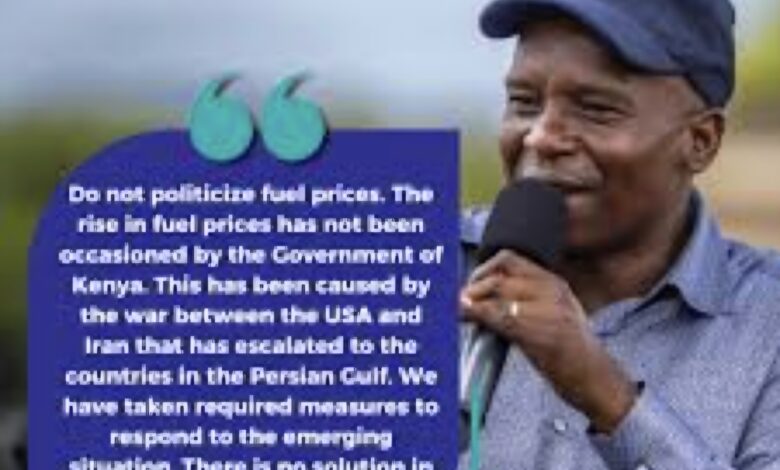
Deputy President Kithure Kindiki echoed this stance, warning against politicisation:
“Do not politicise fuel prices. The rise in fuel prices has not been occasioned by the Government of Kenya. This has been caused by the war between the USA and Iran that has escalated to the countries in the Persian Gulf.”
Kindiki further stressed:
“There is no solution in demonstration. We can only find solutions in short-term and long-term policy interventions… Our competitors must find a better agenda, not insults.”
Nairobi police have already declared the planned April 21 demonstrations illegal due to lack of formal notification, heightening tensions.
What Lies Ahead?
The fuel crisis has revived memories of past protests and is testing the fragile political landscape ahead of 2027 elections. While the government points to global headwinds and its rapid VAT relief as proof of responsiveness, the opposition sees an opportunity to capitalise on public frustration. Whether the ultimatum expires with compromise or confrontation remains to be seen but one thing is clear: ordinary Kenyans, already stretched by the cost of living, are watching closely.
By Mercy Chete
Nairobi, Kenya As pump prices climb to near-record levels, Kenya’s opposition has issued a stern 7-day ultimatum to President William Ruto’s government, demanding immediate tax relief and the scrapping of the controversial Government-to-Government (G-to-G) fuel import deal. With protests scheduled for Tuesday, April 21, under the hashtag #RejectFuelPrices, the country is bracing for potential nationwide mass action over the cost-of-living crisis.
The Energy and Petroleum Regulatory Authority (EPRA) recently hiked fuel prices by up to 7%, pushing super petrol in Nairobi to approximately KSh 211 per litre. Diesel and kerosene followed suit amid global supply disruptions caused by the escalating conflict in the Middle East, particularly involving the Strait of Hormuz. Despite the government’s swift response slashing VAT on petroleum products from 16% to 8% for three months and injecting KSh 6.5 billion in subsidies opposition leaders argue these measures fall short.
Opposition Pressure Mounts
Leading the charge is the United Opposition coalition, fronted by former Deputy President Rigathi Gachagua. In a press briefing on April 15, 2026, Gachagua delivered a blunt message to the government:
“President William Ruto, you must immediately instruct the National Assembly speaker to convene a special sitting to scrap G-to-G… If there is no action taken on the part of William Ruto, we shall announce further measures to the people of Kenya to force William Ruto and the National Assembly to act in the best interest of the people of Kenya.”
The coalition’s joint statement escalated the demands, accusing the administration of prioritising private interests:
“We unequivocally demand the cancellation of the Government-Government petroleum framework as it involves handpicked Oil Marketing Companies that represent the interests of the President.”
Other demands include suspending the recently increased road maintenance levy (from KSh 18 to KSh 25 per litre), halting affordable housing levy deductions, removing VAT entirely on fuel, and pausing higher National Social Security Fund (NSSF) contributions. The opposition has also called for the resignation and prosecution of Energy CS Opiyo Wandayi and Trade CS Lee Kinyanjui over what they term a “fuel scandal.”
Government Fires Back
President Ruto, addressing a rally in Suneka, Kisii County on April 15, dismissed the protest calls and urged restraint, attributing the hikes to external forces while highlighting government interventions:
“Some people are now claiming that since fuel prices have increased globally, they are going to hold protests. Do you think protests will make fuel prices come down? We must use our senses to manage this issue.”
He added:
“I want to tell Kenyans that although there is war in the Middle East that has resulted in high fuel prices across the globe and in our region, because of the G-to-G arrangement, we have managed to stabilise supply and moderate prices… We have also reduced VAT from 16 per cent to 8 per cent for the next 3 months. We have also made sure that the prices of paraffin do not change to cushion Kenyans.”
Deputy President Kithure Kindiki echoed this stance, warning against politicisation:
“Do not politicise fuel prices. The rise in fuel prices has not been occasioned by the Government of Kenya. This has been caused by the war between the USA and Iran that has escalated to the countries in the Persian Gulf.”
Kindiki further stressed:
“There is no solution in demonstration. We can only find solutions in short-term and long-term policy interventions… Our competitors must find a better agenda, not insults.”
Nairobi police have already declared the planned April 21 demonstrations illegal due to lack of formal notification, heightening tensions.
What Lies Ahead?
The fuel crisis has revived memories of past protests and is testing the fragile political landscape ahead of 2027 elections. While the government points to global headwinds and its rapid VAT relief as proof of responsiveness, the opposition sees an opportunity to capitalise on public frustration. Whether the ultimatum expires with compromise or confrontation remains to be seen but one thing is clear: ordinary Kenyans, already stretched by the cost of living, are watching closely.